

Two Pests You Can’t See — But Can’t Ignore
Dust mites and silverfish are two of Melbourne’s most common household pests — and two of the least visible. Dust mites are microscopic arachnids invisible to the naked eye, living by the millions in mattresses, pillows, carpets, and upholstery. You never see them, but for the one in five Australians with a dust mite allergy, their shed skin and faecal matter are among the most potent indoor allergens known — triggering asthma attacks, hay fever, eczema, and chronic rhinitis year-round.
Silverfish are nocturnal and rarely seen during the day, quietly destroying your books, photographs, clothing, and wallpaper in the dark undisturbed corners of your home. By the time damage becomes visible, a well-established population has typically been active for months.
Our 3-Step Treatment Process
1. Property Inspection
We inspect all high-risk zones throughout your property — bedrooms, bathrooms, laundries, wardrobes, roof void, sub-floor, and any storage areas. We identify the pest species present, assess the severity of each infestation, locate active harbourage zones, and check for the moisture and humidity conditions that sustain both dust mite and silverfish populations long-term.
2. Targeted Treatment
We apply low-toxicity residual insecticide spray to all silverfish harbourage zones — skirting boards, wardrobe interiors, bathroom and laundry perimeters, and wall junctions. Insecticidal dust is blown through the roof void and into wall cavities where silverfish breed in large numbers and where dust mite populations concentrate in undisturbed insulation and accumulated organic debris.
For dust mite treatment, we apply an acaricide spray to mattresses, carpeted areas, and upholstered furniture to reduce active mite populations and allergen load.
3. Handyman Exclusion & Prevention
Unlike standard pest controllers, we are also licensed handymen. Both silverfish and dust mites thrive where moisture problems go unresolved. We identify and report on any structural moisture issues — leaking pipes, inadequate ventilation, or damaged sub-floor vents — contributing to the infestation, and seal the gaps and cracks in skirting boards and service penetrations that silverfish use to move between rooms and gain access from outside.
Dust Mite & Silverfish Control Melbourne
Two pests you rarely see — but which quietly trigger allergies and damage irreplaceable items throughout your home.

Dust Mite Control Melbourne
Dust mites are the leading cause of indoor allergies in Australian homes. House dust mites — Dermatophagoides pteronyssinus — are microscopic arachnids less than 0.5mm long, completely invisible without magnification. They live in mattresses, pillows, duvets, carpets, upholstered furniture, and soft toys, feeding on shed human skin cells. A single mattress can host up to 2 million dust mites.
They do not bite — it is their shed skin and faecal particles that cause harm. These particles become airborne when disturbed by movement, vacuuming, or bed-making, and are inhaled directly into the respiratory system. For sensitised individuals, regular exposure triggers asthma attacks, perennial allergic rhinitis (year-round hay fever), eczema flare-ups, and chronic eye irritation. Dust mite allergy is particularly impactful in children — studies link early high-level exposure to the development of childhood asthma.
Where They Concentrate: Dust mites thrive wherever warmth, humidity above 50%, and a food source — shed human skin — are available together. The highest concentrations in a Melbourne home are almost always found in the master bedroom mattress, followed by pillows, duvets, and fitted carpets in bedrooms. Secondary zones include lounge upholstery, soft toys, and the accumulated organic debris in undisturbed roof void insulation. Melbourne's humidity during summer and autumn creates peak breeding conditions, and modern, tightly sealed homes can sustain populations year-round.
Silverfish Control Melbourne
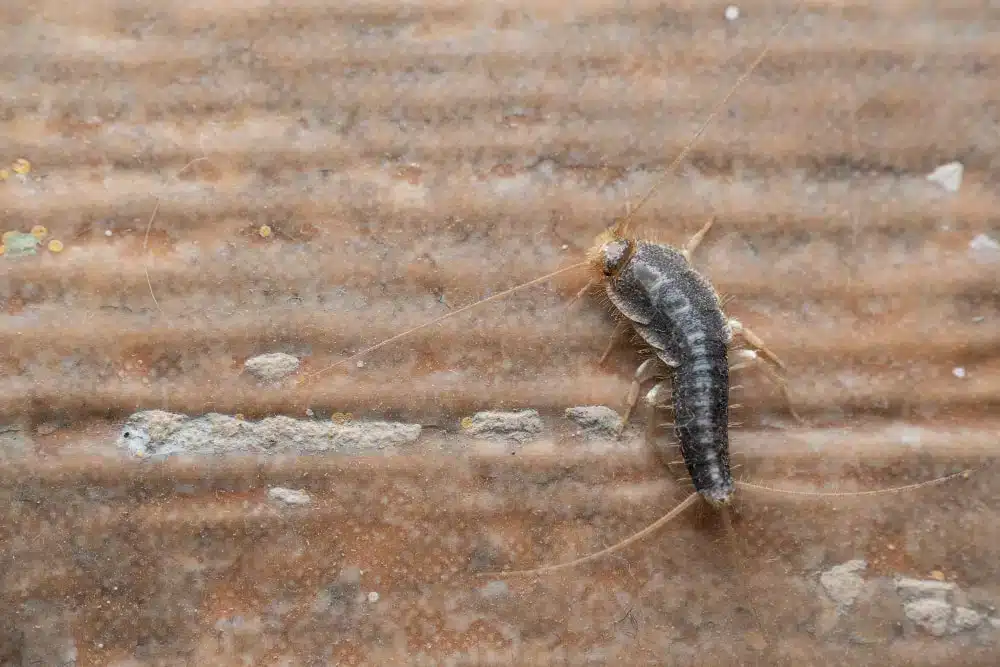
Silverfish are one of the most ancient insect species on earth — they predate the dinosaurs by hundreds of millions of years — and their resilience makes them one of the most persistent household pests in Melbourne homes. Small, wingless, with a distinctive silver-grey scaly body and three tail filaments, they grow up to 20mm long and move with a fast, fish-like wriggle.
They are strict nocturnal feeders, remaining hidden during the day in dark, humid crevices. Most homeowners first notice them when they fall into baths or sinks at night, trapped by the smooth walls they cannot climb out of, or when they scatter from a wardrobe or bookshelf disturbed after a long period of disuse.
Where They Hide: The primary breeding and living zones for silverfish in Melbourne homes are the roof void and wall cavities, where they exist in large undisturbed populations that feed on accumulated organic debris, dust, and insulation material. From there they migrate down through wall cavities and around service pipes into bathrooms, laundries, kitchens, and wardrobes in search of additional food and moisture.
Signs of Infestation: Because silverfish are nocturnal and fast-moving, they are rarely seen directly. The most reliable signs are yellow surface staining and irregular grazing on paper, books, and cardboard; small pepper-like black droppings in wardrobe corners and bookshelf bases; shed silvery-grey skin scales in undisturbed areas such as wardrobe floors and storage boxes; and small irregular holes in natural fibre clothing, particularly wool and cotton stored in dark cupboards. If you are regularly finding silverfish in your bathroom or kitchen, there is almost certainly a well-established population in the roof void above.
Note: For dust mite allergy sufferers, professional treatment should be combined with allergen-reduction strategies — mattress and pillow encasements rated for dust mite allergen barrier, hot-washing of all bedding weekly at 60 °C, and the replacement of heavy curtains and thick-pile carpets in bedrooms with hard flooring and blinds where practical. We will provide personalised advice based on your property during the inspection.
What’s Included In Our Treatment?
We leave nothing to chance. Our master dust mite and silverfish treatment covers every zone of your property where these pests live, breed, and cause damage.

Inside The Home
Insecticidal dust blown deep into the roof cavity — the primary breeding zone for silverfish in Melbourne homes and a significant reservoir of dust mite allergen in accumulated debris. This is the most important and most commonly missed treatment zone for both pests.
Acaricide spray applied to mattress surfaces, bed bases, and carpeted bedroom areas to reduce active dust mite populations. Bedroom skirting boards and wardrobe interiors are treated for silverfish at the same time.
Targeted residual spray to wardrobe interiors, shelf edges, drawer runners, and linen storage areas where silverfish feed on natural fibre clothing and stored textiles. Eggs laid in crevices within these spaces are killed on contact with the residual product.
Residual spray to all wet-area skirting boards, wall junctions, under vanities, and around pipe penetrations — the primary access routes silverfish use to migrate from roof voids and wall cavities into living areas.
Acaricide treatment to carpeted living areas and upholstered furniture to reduce dust mite populations across all high-contact soft surfaces. Low-odour formulations are dry within 20 minutes.
Outside The Home
If your property has a sub-floor, we treat it with insecticidal dust and residual spray. Sub-floors are a significant silverfish breeding zone in elevated Melbourne homes, particularly where stored paper, cardboard, or organic debris has accumulated.
Residual spray to external walls and around window and door frames to intercept silverfish entering from the garden and through the building envelope in search of moisture and food sources inside.
As licensed handymen, we seal the gaps in skirting boards, around pipe penetrations, and in sub-floor vent damage that silverfish use to travel freely through the building structure — closing the internal migration routes that bring them from roof voids into living areas.
Why Choose Good Guys?
The Handyman Advantage
Both dust mites and silverfish thrive where moisture problems go unresolved. Because we’re also licensed handymen, we identify and report on those structural issues — and seal the gaps that allow silverfish to migrate freely through your home — something no standard pest controller offers.
Guaranteed Satisfaction
We use commercial-grade, low-toxicity products that deliver lasting results. If dust mites or silverfish return within the guarantee period, we come back and re-treat at no additional cost.
100% Pet & Child Safe
All products are low-toxicity and safe for children and pets once dry — typically 20 minutes for spray areas. Roof void dusting requires no domestic exclusion time at all.
Licensed & Insured
Victoria Wildlife & Pest Control Licensed. $20M Public Liability Insurance. Professional, qualified technicians on every job.
Victoria Wildlife & Pest Control Licensed. $20M Public Liability.