
The Damage Is Being Done Right Now — You Just Can’t See It
Carpet moths and carpet beetles are two of the most destructive — and most overlooked — pests in Melbourne homes. Unlike cockroaches or rodents, you rarely see them until the damage is already done. That is because it is not the adult insects that destroy your carpets, rugs, and clothing — it is their larvae.
Carpet moth larvae are tiny cream-coloured caterpillars that feed continuously on natural fibres, chewing through wool, silk, cashmere, and leather in the dark undisturbed areas of your home. Carpet beetle larvae are small, bristly grubs that consume the keratin in animal-based fibres with the same silent, relentless efficiency. By the time bare patches appear in your carpet or holes appear in a stored wool coat, the infestation has typically been active for months.
Melbourne’s variable climate — warm, humid summers and cool damp winters — creates near year-round breeding conditions for both species. Homes with wool carpets, Persian rugs, heritage furniture, and natural fibre clothing are at the highest risk. A single missed infestation can cause thousands of dollars in irreplaceable damage. At Good Guys Pest Control, we treat larvae, eggs, and adults across every zone of your property where these pests live and breed — and we back every treatment with a full guarantee.
Our 3-Step Carpet Moth & Beetle Eradication Process
1. Property Inspection
We conduct a detailed inspection of all at-risk zones — carpets and rugs (particularly along edges and under furniture), wardrobes and clothing storage, upholstered furniture, curtains, roof voids, and wall cavities where bird nests or animal matter may be harbouring beetle populations. We identify the species present, assess the severity and spread of the infestation, and locate all active larval feeding areas before treatment begins.
2. Targeted Multi-Stage Treatment
We apply a low-toxicity residual insecticide spray specifically formulated for fabric pests to all affected carpet areas, rug edges, skirting boards, wardrobe interiors, and upholstered furniture surfaces. Insecticidal dust is applied to roof voids and wall cavities where carpet beetles commonly nest in bird debris and animal matter. For active larval infestations in carpets, treatment is applied deeply into the base of the carpet pile — where the larvae feed — not just the surface.
3. Handyman Exclusion & Prevention
Unlike standard pest controllers, we are also licensed handymen. Carpet beetles frequently enter properties through gaps around roof vents, broken eave linings, and openings where birds nest in the roof void. We seal these entry points on the day, closing the access routes that bring beetles back season after season and preventing new nesting sites from establishing in the building structure.
Carpet Moth vs Carpet Beetle — What’s The Difference?
Both pests cause very similar damage and are frequently confused with each other. Understanding which species you have determines exactly where to look and how to treat them.
Carpet Moth (Webbing Clothes Moth)
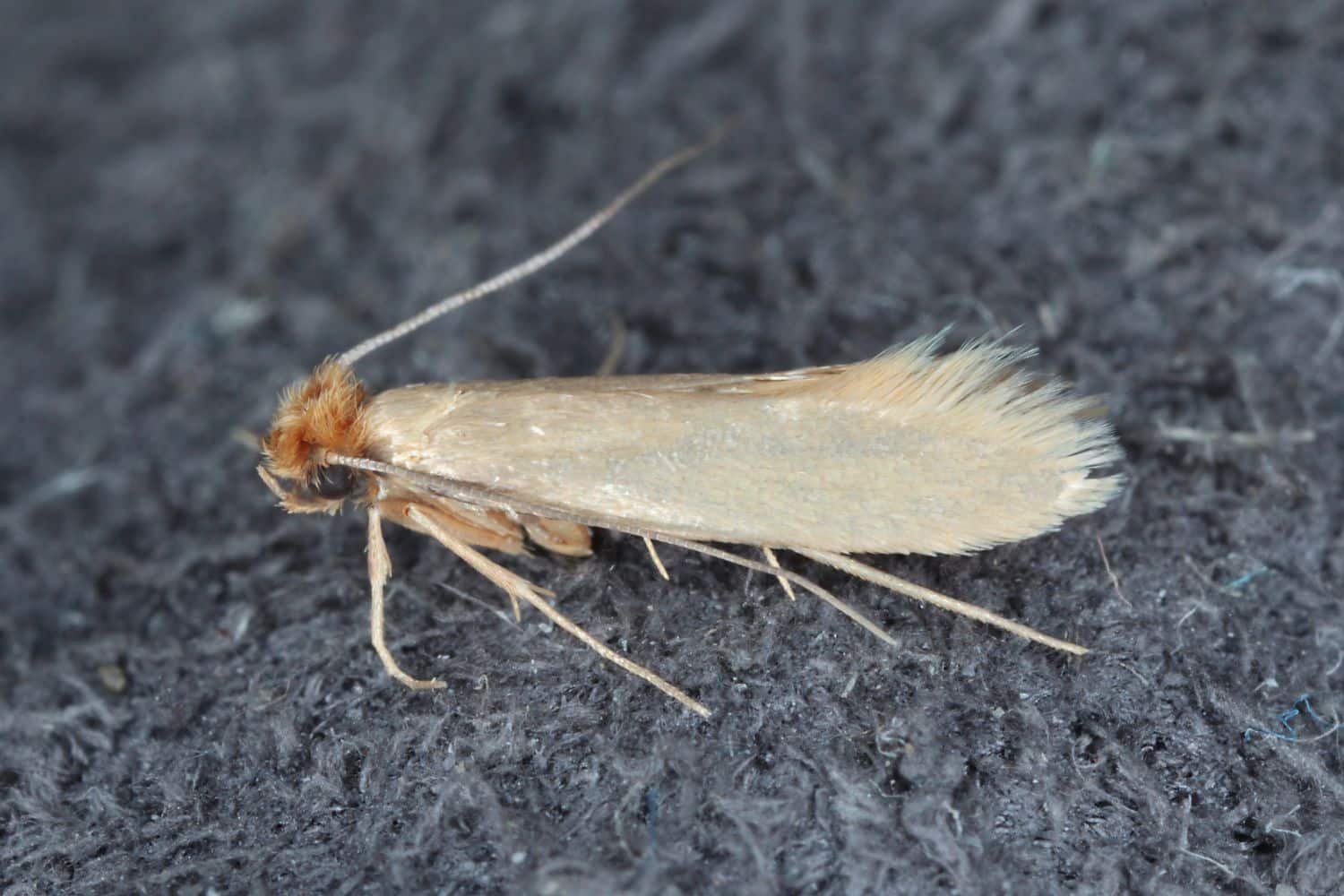
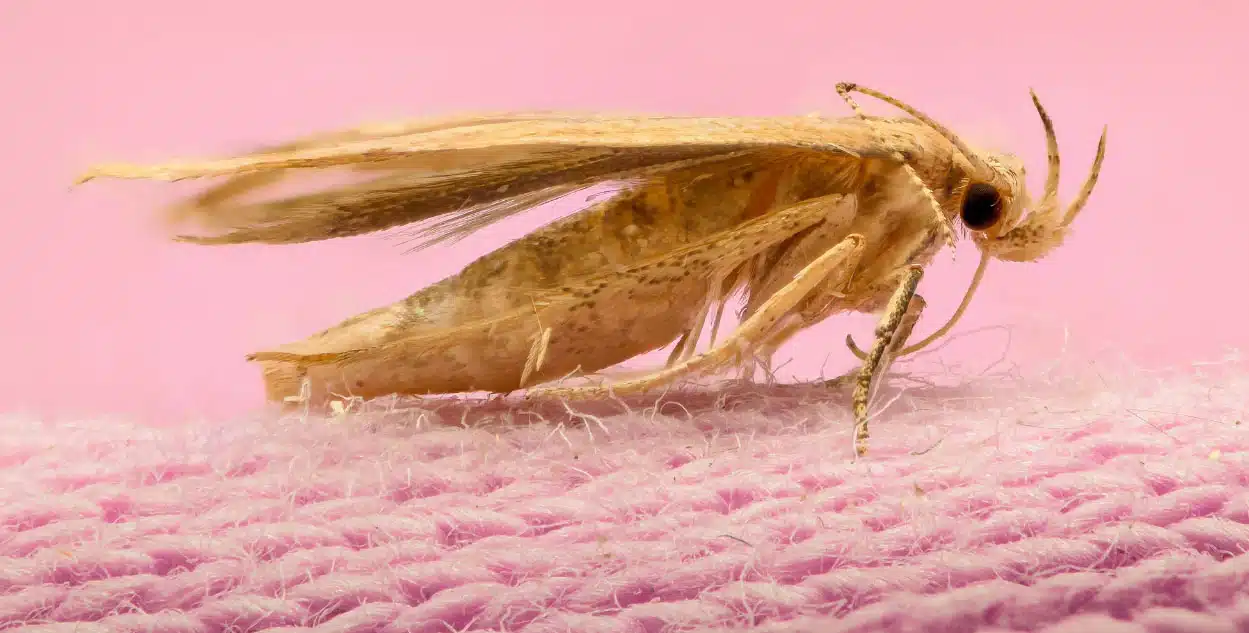
The webbing clothes moth — Tineola bisselliella — is the species most commonly responsible for carpet and clothing damage in Melbourne homes. Adults are small, golden-buff coloured moths around 6–8mm long. Unlike many moths, they actively avoid light and will scatter quickly when a wardrobe door is opened or a carpet is disturbed. The adult moth does not feed or cause damage — it lives only to lay eggs. Each female can lay up to 200 eggs directly onto natural fibre surfaces.
The larvae that hatch are the destructive stage. Cream-coloured with a dark head, they spin silken tubes or mats as they feed — the tell-tale webbing you find in damaged carpet areas. They feed continuously for weeks to months depending on temperature, consuming wool, silk, cashmere, fur, leather, and feathers. Damage appears as irregular bare patches in carpets, particularly under furniture and along edges where the carpet is undisturbed.
Our Solution: Residual insecticide spray applied deep into carpet pile along all edges, under furniture, and into wardrobe interiors and clothing storage areas. We also treat curtains and upholstered furniture where carpet moth eggs are commonly laid.
Carpet Beetle (Varied Carpet Beetle)
The varied carpet beetle — Anthrenus verbasci — is the most common carpet beetle species found in Melbourne. Adults are tiny, rounded, and mottled brown, black, and white — around 2–3mm long. Unlike carpet moths, adult carpet beetles are attracted to light and are often first noticed on windowsills in spring as they emerge from overwintering in the roof void or wall cavities. They feed outdoors on pollen and nectar before flying inside to lay eggs.
The larvae — known as woolly bears — are small, bristly, and banded in brown and cream. They feed on keratin found in wool, silk, leather, fur, feathers, and animal hair — including pet hair accumulated in carpet edges and under furniture. Unlike carpet moths, carpet beetle larvae actively move around the property in search of food, which means damage can appear in multiple rooms and locations simultaneously. Shed larval skins are often the first physical sign of their presence.
Our Solution: Residual spray to all carpet edges, skirting boards, wardrobe interiors, and upholstered furniture combined with insecticidal dust in roof voids and wall cavities where carpet beetles commonly nest and overwinter. We also seal the entry points around eaves and roof vents they use to access the building structure.

Black Carpet Beetle
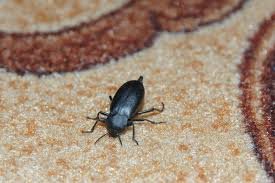
The black carpet beetle — Attagenus unicolor — is larger than the varied carpet beetle at 3–5mm and uniformly black or dark brown. Its larvae are elongated and reddish-brown with a tuft of long hair at the tail end. Black carpet beetles are particularly fond of stored natural materials — woollen blankets, felt, animal skins, and dried food products — and are often found in storage areas, roof voids, and the backs of wardrobes where items are left undisturbed for long periods.
Our Solution: Targeted residual spray to all storage areas, wardrobe backs, and carpet edges combined with roof void dusting. We advise on long-term storage practices to reduce the risk of re-infestation in stored woollen items.
Note: Persian rugs, antique textiles, and heritage wool carpets may require specialist handling advice alongside professional treatment. If you have irreplaceable or high-value textile items, please advise us when booking and we will tailor our treatment approach accordingly.
What’s Included In Our Carpet Moth & Beetle Treatment?
We leave nothing to chance. A standard Good Guys treatment covers every zone where carpet moths and carpet beetles live, feed, and breed across your entire property.
Inside The Home
Residual insecticide spray applied deeply into carpet pile along all edges and under furniture — the primary feeding zones for both carpet moth and carpet beetle larvae. All-room coverage across the full property.
Targeted spray to wardrobe interiors, shelf edges, and drawer runners where carpet moth eggs are commonly laid on stored wool, cashmere, and natural fibre clothing. We advise on which garments to launder or freeze before treatment.
Treatment of upholstered furniture seams, cushion edges, and curtain bases where carpet moth larvae migrate from carpets and where carpet beetle larvae feed on natural fibre upholstery.
Insecticidal dust blown through the roof cavity to eliminate carpet beetles nesting and overwintering in bird debris, animal matter, and accumulated natural material in ceiling spaces.
Outside The Home
Treatment of eave undersides and roof vent surrounds where carpet beetles overwinter and adults emerge in spring. As licensed handymen, we seal the gaps around roof vents and broken eave linings that beetles use to access the building interior.
Residual spray to external window frames, door surrounds, and building base to intercept carpet beetles flying in from the garden before they enter the home to lay eggs.
Treatment of garages and outdoor storage areas where natural fibre items, rugs, blankets, and clothing are stored between seasons — a frequently overlooked infestation source that standard treatments miss entirely.
Identification and treatment of other structural gaps and junctions that allow carpet beetles to move between outdoor nesting sites and indoor fibre-rich areas.
Why Choose Good Guys?
The Handyman Advantage
Carpet beetles re-enter through gaps around roof vents and broken eave linings that a spray alone will never close. Because we’re also licensed handymen, we seal those access points on the day — something no standard pest controller provides.
Guaranteed Satisfaction
We use commercial-grade, low-toxicity products that deliver lasting results. If carpet moths or beetles return within the guarantee period, we come back and re-treat at no additional cost.
100% Pet & Child Safe
All products are low-toxicity and safe for children and pets once dry — typically around 20 minutes. We use formulations approved for use in homes with sensitive occupants.

Victoria Wildlife & Pest Control Licensed. $20M Public Liability Insurance. Professional, qualified technicians on every job.